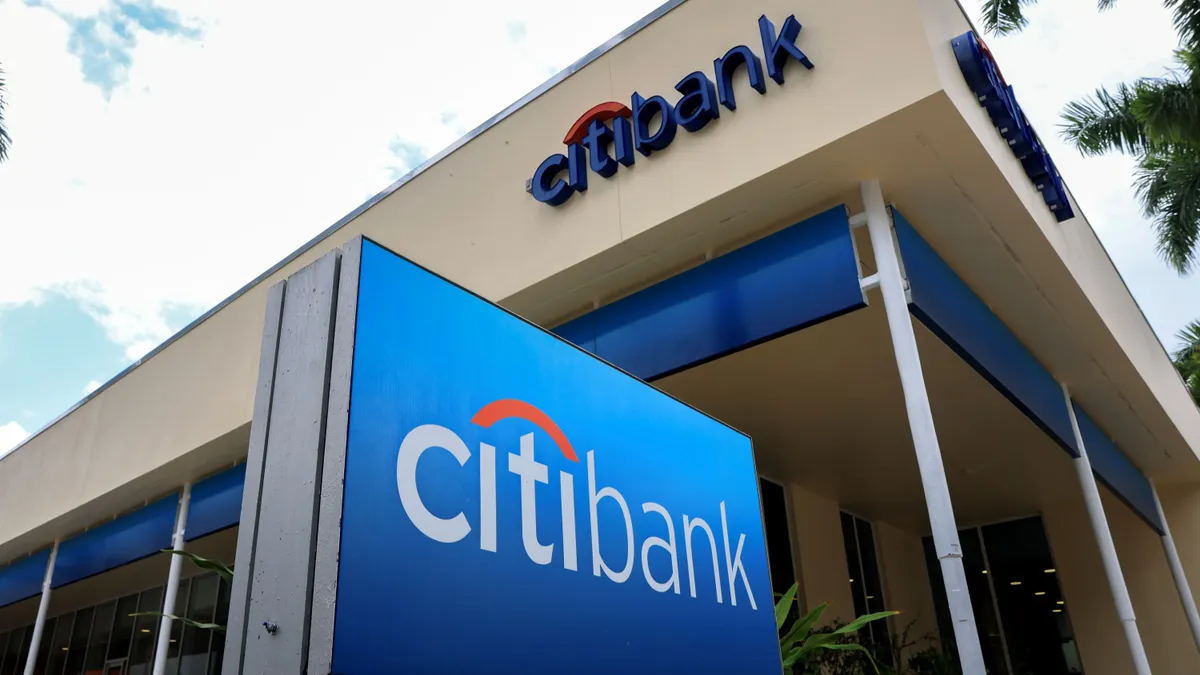
As Citi executives pitched the bank’s growth story to investors Thursday, CEO Jane Fraser also sought to starkly contrast the current New York City-based bank with the one hit with regulatory consent orders tied to aging technology infrastructure.
“The timeline for the ultimate removal of the consent orders – well, that sits with our regulators,” Fraser said during the bank’s first full investor day in four years. “But the way we run the bank today is fundamentally different from where we started, and it is yielding the benefits.”
Citi remains under two consent orders from the Federal Reserve and the Office of the Comptroller of the Currency, and bank executives are hopeful that consent order work will be completed this year, Reuters reported in February.
“In parallel with our transformation, we have built a modern technology foundation: a simpler tech stack, improved data quality, and we automated work that had no business being manual,” the CEO said Thursday.
Fraser was alluding to the high-profile manual error that occurred in 2020, when a Citi employee mistakenly transferred $900 million of the bank’s money to creditors of the cosmetics company Revlon.
Less than two months later, the Fed and OCC faulted the bank over persistent issues with risk management, data governance and internal controls; the regulators hit the bank with more penalties in 2024 for failing to make sufficient progress.
But Fraser’s pitch Thursday went beyond repairs, as she and other bank executives aimed to convey that a “new Citi has emerged” following years of transformation work and efforts to simplify the $2.8 trillion-asset bank.
“This was about more than just fixing the old Citi,” she said. “It was about building the bank the next decade demands.”
Hiring, refreshing branches
Executives emphasized the bank’s global network and capabilities, and how its five businesses can serve clients in a unified way – which Citi is chasing to drive stronger growth and higher returns.
“A client can have their global cash managed via services, their currency hedged by markets, a strategic acquisition advised on and financed by banking, and the personal wealth of its executives managed by the private bank, with their spending supported by cards,” Fraser said.
Piper Sandler analyst Scott Siefers noted Thursday felt “180 degrees from where the company was several years ago,” and “set a solid foundation for the next chapter” of Citi’s story.
The bank’s 14% to 15% medium term target for return on tangible common equity unveiled Thursday “might not have met the market’s most ambitious expectations heading in, but the assumptions management is using to get there look very conservative and leave room for outperformance,” Siefers wrote Thursday.
To achieve that goal, the bank needs consistent returns from its services and consumer cards businesses relative to recent years, more modest improvement in the ROTCE of the markets business, and “the largest needed lifts” in wealth and banking, noted Truist Securities analyst John McDonald.
“Both of these businesses are fiercely competitive, with a long list of other banks previously trying (and failing) to do what Citi is currently attempting,” he wrote Thursday.
Citi CFO Gonzalo Luchetti said the bank will invest $5 billion across its businesses by 2028, “largely self-funded through structural efficiency savings.”
Spending will cover payments and trading, increased marketing for card acquisitions, strategic hiring in banking and wealth, and physical branch refreshes, he said.
Citi has about 650 branches in six U.S. markets, and the bank plans to refresh its branch network to “maximize space for advisory interaction,” said Andy Sieg, Citi’s head of wealth.
The bank will also add about 400 client advisers and personal bankers, and, as part of “a dramatically increased focus on small business,” about 200 small-business advisers, Sieg said. The lender will also roll out a refreshed small-business product suite, he said.
Citi’s retail bank was recently integrated into its wealth business, which Fraser called one of the lender’s more significant growth opportunities. Sieg said AI-powered adviser Citi Sky and other technology will bolster employee productivity.
As the wealth unit – which has about $1.3 trillion in client assets – works to capture some of the $5 trillion clients have elsewhere, Sieg said connections across the bank matter, such as plugging the private bank into Citi’s institutional businesses. “Do you have real feeder engines for the business that you can lean into?” he said.
“In Wealth quite frankly we probably would have less faith that the strategy was executable if it had been anyone other than Andy Sieg making the presentation,” Oppenheimer analyst Chris Kotowski wrote Friday.
‘Bank with ambition’
Vis Raghavan, Citi’s head of banking, outlined the opportunity to do more business in the U.S. and in high-growth sectors, focus on primacy with sponsors and expand the bank’s middle-market business.
In the near term, Citi aims to increase its banking headcount by 15%, although Raghavan repeatedly stressed the importance of quality hires over quantity. The lender also wants to grow its investment banking share to more than 6%, he said. In 2022, it was 4%, and last year, it reached 4.7%.
“If it looks and feels like a different Citi, it’s because it is,” Raghavan said.
Luchetti noted the bank’s targets are “commitments, not aspirations,” and Fraser stressed how far the bank has come since the 2022 investor day.
“Four years ago, I told you we would transform Citi. And today, you see that we have. This is now a bank with ambition,” she said. “We’ve put Citi back in the game. We intend to stay there, and we intend to win it.”
Still, amid an intensely competitive banking environment in which most banks strive to deepen client relationships, Citi has its work cut out for it, some analysts indicated.
“We believe growing the bank by executing on the strategy outlined at its investor day could prove more challenging due to the inability to control many outside variables that they didn't have to confront in their downsizing strategy,” RBC Capital Markets analyst Gerard Cassidy wrote Thursday.