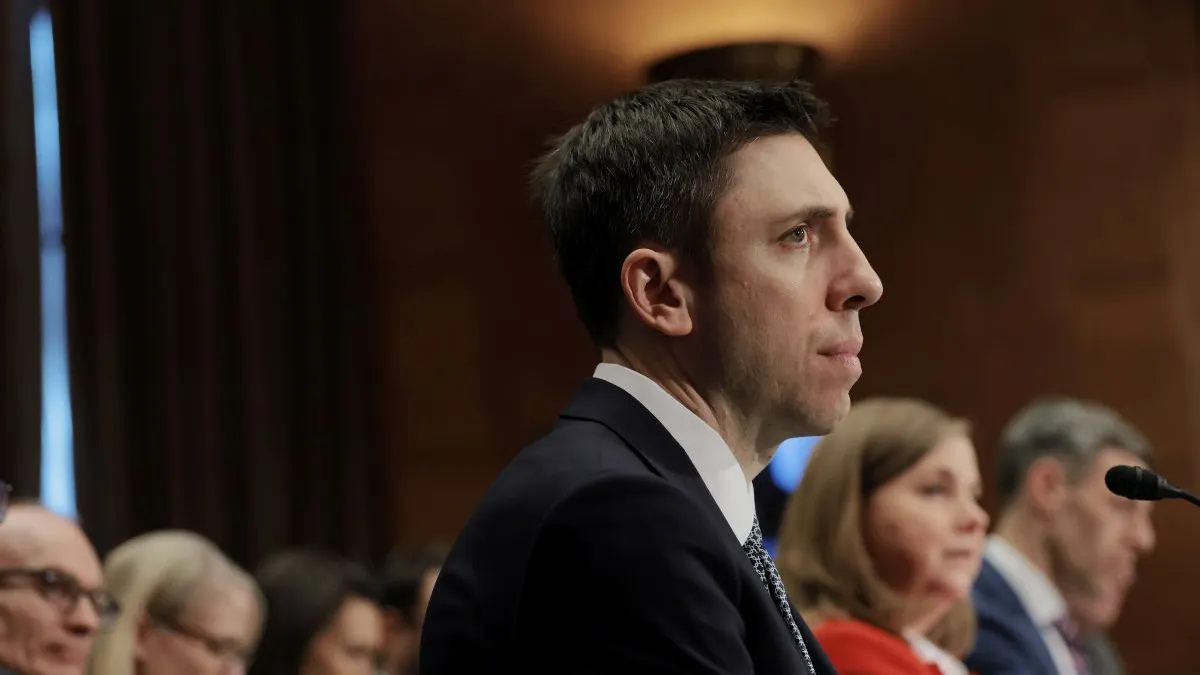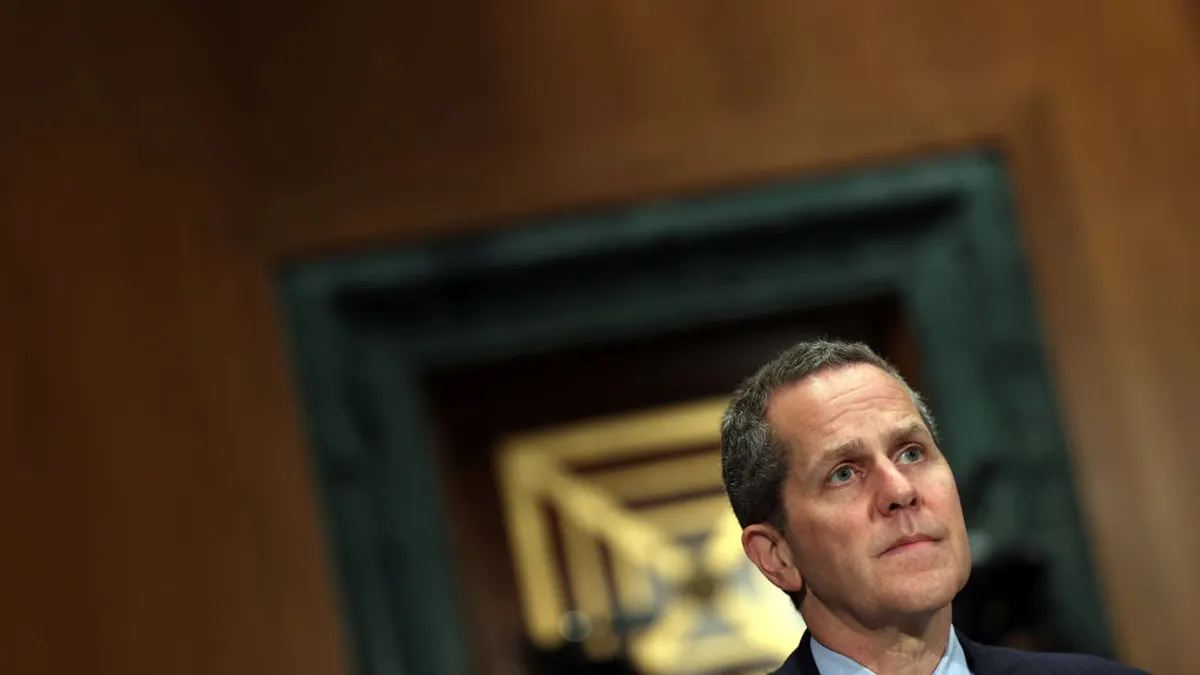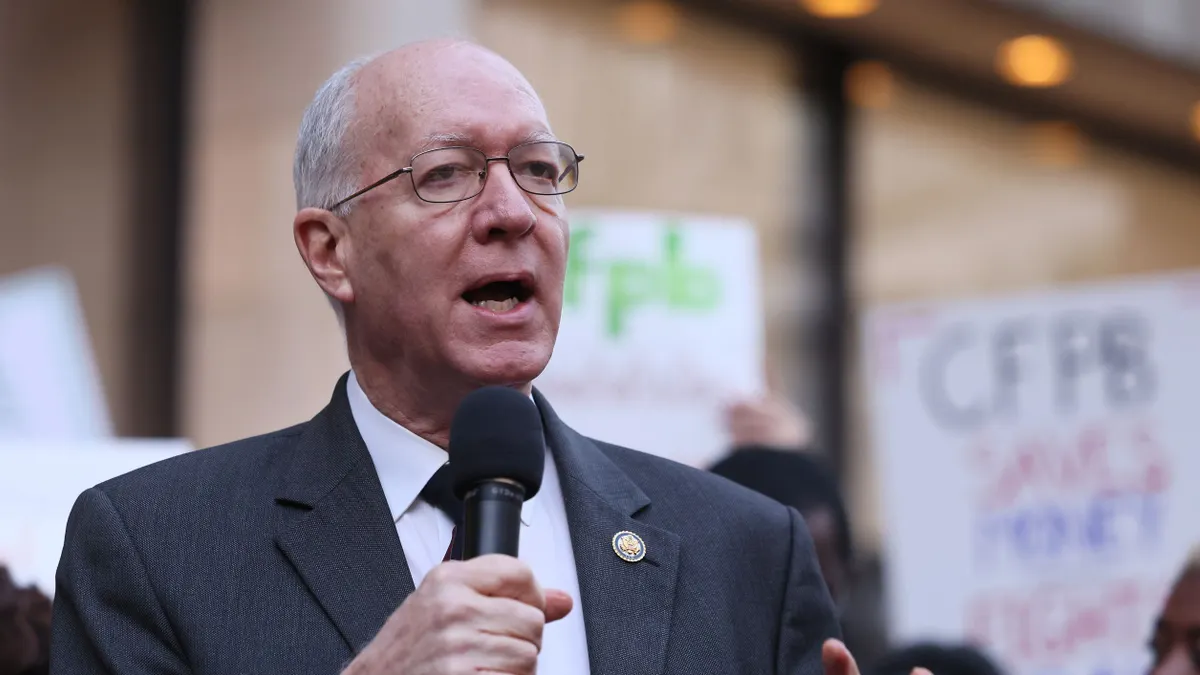
Rep. Bill Foster issued an artificial intelligence-related warning to federal banking regulators at a recent House Financial Services Committee hearing.
“I don’t think that we are prepared for an agentic AI bank run,” Foster, D-IL, told leaders of the Federal Reserve, Federal Deposit Insurance Corp., Office of the Comptroller of the Currency and National Credit Union Administration on June 4.
With agentic AI, the March 2023 failure of Silicon Valley Bank could have occurred in seconds, not hours, Foster said.
“We are not ready for that, and you should come up with a plan to deal with that, because we can have that hearing now, or we can have it later,” he told regulators.
Given the emergence of AI tools, preparing for liquidity risks of digitally driven bank runs needs to be a top priority, said Foster, the ranking member of the subcommittee on financial institutions.
“I've been worried a lot about AI generally and, specifically, agentic AI destabilizing the financial system,” Foster told Banking Dive in a June 9 interview.
Such a scenario could arise “if everyone had their personal AI agent with standing orders that, if you even hear a rumor that my bank is in trouble, just get my money the heck out of there,” Foster said.
Foster is also concerned about smaller banks’ access to Anthropic’s Mythos model and that those lenders aren’t receiving the same level of cyber defense as larger banks. A federally designated, open source software stack could be the solution to that and the bank run issue, he said.
Editor’s note: This interview has been edited for clarity and brevity.
BANKING DIVE: What should regulators and industry do to address risks fueled by AI?
BILL FOSTER: The only entity that can stop a run of a medium-sized bank is the Federal Reserve and its discount window, and the problem is the Federal Reserve cannot be operating off of a three-month-old call report when that happens.
You have to move toward having real-time dashboards visible to the regulators. The big banks have this internally. They do business 24/7 around the world, and so that software exists, but it's simply not available to small community banks, either directly or even indirectly through their back-office providers.
Another observation is that we don't understand the defensive perimeter for when a Mythos-like set of threats comes up. What is the software that we defend first? This was sort of handled by Anthropic on an ad-hoc basis. But you can't be in a situation where we're going to save the global systemically important banks first, and then if we get around to it, we'll help the smaller players, because that will be one more thing that drives banking consolidation.
My best thought on the solution to these problems is to have a federally designated, open source software stack that does everything from back-office accounting to regulatory compliance, and reporting on pledgeable assets to the discount window – a complete set of software that effectively operates in real time, so when the bank run starts at 2 a.m. on a Sunday, the Federal Reserve has visible, in real time, all of your pledgeable assets, and you can see the true capital position of your bank and pledgeable assets that can be brought to bear immediately.
That's the situation we have to be in, not only for giant firms. Even relatively small banks could be the subject of rumors on the internet and subject to runs the same way they're subject to cyberattacks. And if the next Mythos comes, that open source software stack would be what would get defended first and foremost.
What other changes might help?
The Financial Data Transparency Act, which we passed on a bipartisan basis, is intended to get the regulators to move toward standardized reporting.
This solves part of the problem, which is they're at least talking the same language. It's not mandatory, but they're being encouraged to report things in the same language. If you look at the detailed definitions of fields, those are not standardized. Just because you're all reporting things in Extensible Business Reporting Language doesn't mean you have the same definition for a mortgage that's in trouble.
That's something we eventually have to do, because we're going to need to be able to wind down a failed, complex firm that has many kinds of assets across many fields, and to do that, you're going to have to have standard definitions. This is going to be one of my priorities, to get a reference software stack that has all the features you’d want.
Are you considering drafting legislation related to this?
I’m reaching out to business groups to get their reaction. It's been uniformly positive. The smaller players like the idea of just plug into this, implement your secret sauce, but do all of your regulatory compliance through the standard, open source software stack. That's tremendously popular for the smaller players or even the medium-size players that are not happy because they were excluded from the first round of access to Mythos.
Even the larger banks are not necessarily opposed to this. JPMorgan Chase CEO Jamie Dimon has been mentioning open source repeatedly. Under all circumstances, we need more clarity in the governance of this.
Are regulators receptive to this?
They have been working slowly on the implementation of the Financial Data Transparency Act. We’re going to have an oversight hearing to look at their level of compliance with this.
They should be standardizing the meaning for what different kinds of non-performing loans are – that should be the same, whether you're a credit union or a state- or federally regulated bank, so when trouble occurs, the dashboards all report the same thing. It will be tremendously useful.
My current feeling is to just put it out as a challenge to industry and to the open source groups like FINOS, which is developing a range of open-source financial services products. There is some momentum here, and there should be a challenge to say, let's see if in the next six months to a year we can come up with a reference implementation of what this would look like.
Given the incredible performance of coding agents, it's not unrealistic to have top-of-the-line AI coding agents develop at least the first pass of the system, and then have the regulators have a look at it and ask, does this give you the information that you want to see if there was a real-time banking crisis?
It's not just the banks. A stablecoin issuer, for example, can have a run on the stablecoin. You can have runs on insurance companies, depending on how they're set up. A lot of these fintechs that are not depository institutions but are still crucial may also need the same kind of real-time regulatory reporting.